


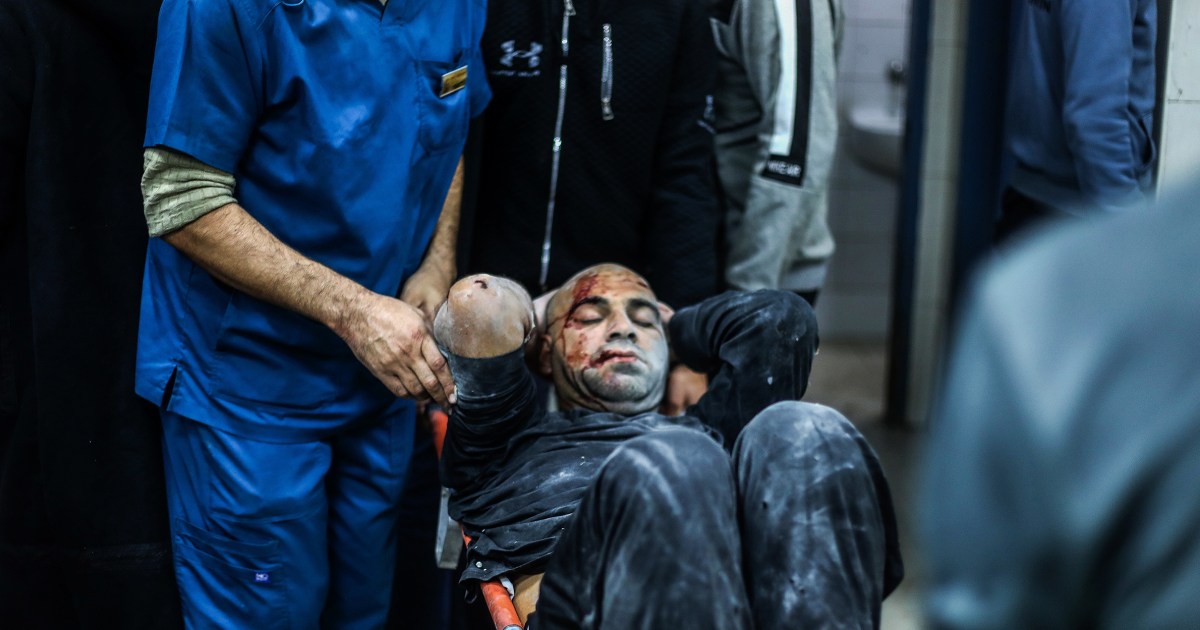
Tragic Loss in Gaza: The Impact of Military Actions on Healthcare
The recent escalation of military actions in Gaza culminated in the tragic killing of Dr. Rizq, a dedicated surgeon known for his tireless efforts to provide care during the ongoing conflict. Watermelon Pictures, the distributor for a related film project, expressed their devastation over the incident, condemning the attack.
The Life of Dr. Rizq
Dr. Mohammed Zaqout, general director of the Health Ministry in Gaza, highlighted Dr. Rizq’s commitment to his medical duties, stating, “He was at the hospital during the entire war. He was rescuing the wounded, the patients. He didn’t abandon his duties for even one day.” In an emotional address to mourners surrounding the covered body of Dr. Rizq, Zaqout called him “one of the best doctors” and noted his pride in saving lives.
Casualties of Conflict
In addition to Dr. Rizq, Nasser Hospital reported that a 13-year-old boy named Jihad Naeem Muhammad Abu Tilikh also lost his life in the attack. This incident is part of a broader pattern of violence impacting medical facilities and personnel in the area.
Military Explanation and Claims
The Israeli military, alongside the Israel Security Agency (ISA), claimed that their forces targeted a senior Hamas leader and several militants. According to their statements, these individuals had been using the hospital as a base for operations. The targeted individual was identified as Muhammad Abu Ismail, commander of Hamas’ Khan Younis Brigade, who was reportedly involved in advancing assaults from the hospital.
The Israeli military further alleged that Hamas had established a command center within the hospital complex, using it for storage of weapons and conducting interrogations. Photos were released purportedly showing munitions discovered on-site.
Personal Accounts and Reactions
The impact of these strikes was felt personally by many, including Tahani Ibrahim Abu Anza, who reported the death of her brother, Khaled Abu Anza. Although Nasser Hospital confirmed his death, Tahani suggested that her brother, who was receiving rehabilitation after surgery, was not involved with Hamas and was targeted in error. “He did not come to the hospital to engage in combat or resistance. He came for medical treatment,” she stated.
In response to the accusations of using medical facilities for military operations, Hamas condemned these claims as “lies of the criminal enemy” and categorized the attack as a “war crime.”
International Law and Healthcare in Conflict Zones
Under international law, hospitals are afforded special protection, yet they have frequently come under attack during the ongoing conflict in Gaza. The Israeli military maintains that Hamas operates within medical facilities—a claim the group vehemently denies.
The recent assault on Nasser Hospital was not an isolated incident. A previous attack in August 2025 resulted in at least 20 deaths, including that of civilians, journalists, and health workers, igniting international outrage.
According to the World Health Organization, Gaza’s healthcare infrastructure has been significantly compromised; of its 37 hospitals, only two are fully operational, while 18 are partially functioning, leaving 17 non-operational.
Continuing Concerns
The ongoing Israeli airstrikes in Gaza persist despite a ceasefire agreement reached in October 2022, raising pressing concerns regarding the protection of civilians and the operational status of medical facilities amidst the conflict.
Concluding Thoughts
The loss of medical professionals and the damaging effects on healthcare facilities only deepen the humanitarian crisis in Gaza, underscoring the need for continued dialogue and efforts toward a lasting resolution.