


Putin’s Warning: Foreign Troops in Ukraine Will Be Targeted
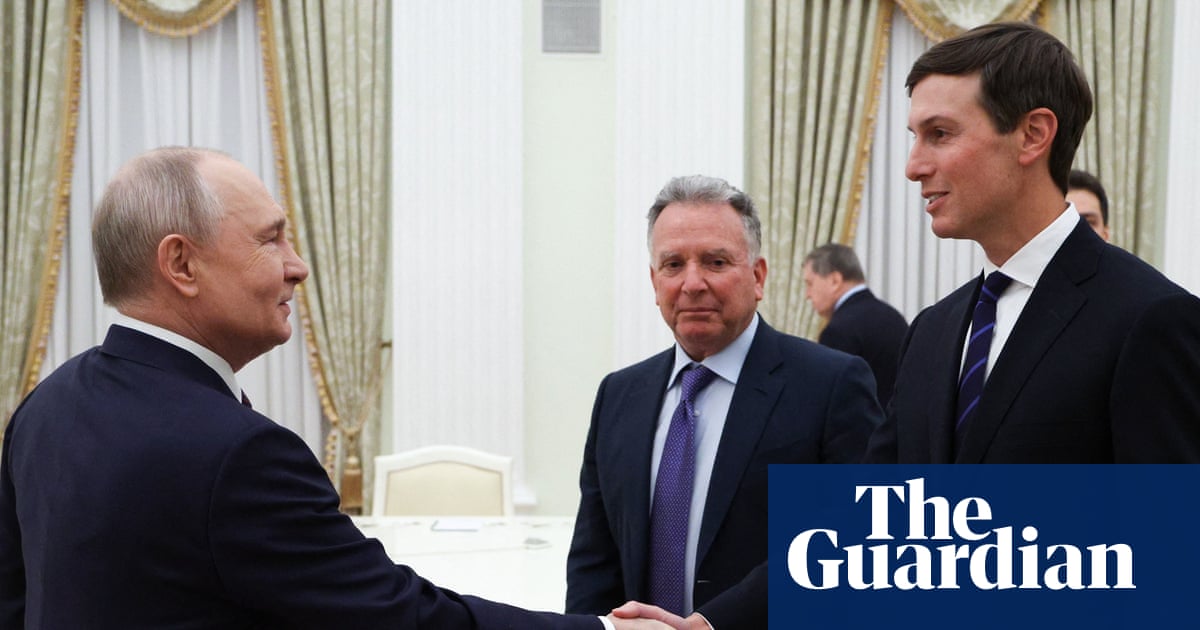
In a recent meeting in the Kremlin, Russian President Vladimir Putin delivered a stern warning to U.S. negotiators regarding the deployment of foreign troops in Ukraine. This hardline stance coincided with significant disruptions experienced by the Ukrainian military to the Starlink satellite service, operated by Elon Musk’s company.
Russia’s Stance on Territorial Control
During discussions with Jared Kushner and Steve Witkoff, representatives of the United States, Putin reaffirmed his demands for full control over four regions of Ukraine, which Russia claims to have annexed. He explicitly rejected the notion of foreign peacekeeping troops in the country, labeling such a move as a “continuation of war.”
Hopes for Peace Diminish
Putin’s comments dashed optimistic perspectives for a potential peace agreement in the near future. Ukrainian President Volodymyr Zelenskyy had previously mentioned a “window of opportunity” for negotiations before the end of 2026, but the Kremlin’s uncompromising stance complicates this outlook.
Involvement of European Representatives
The latest visit by Kushner and Witkoff aimed to facilitate European participation in ongoing discussions. Post-meeting, Witkoff confirmed that European representatives would engage in the next phase of talks, underscoring the importance of their involvement in the negotiation process.
European Security Architecture Concerns
Amid heightened diplomatic engagement, notably following talks in Abu Dhabi, the Kremlin is seeking to position the negotiations within a broader context of European security. However, European leaders remain cautious about focusing on a new security architecture while hostilities persist. EU foreign policy chief Kaja Kallas emphasized the need for Russia to adhere to existing agreements such as the Budapest Memorandum, which guarantees Ukraine’s territorial integrity. She deemed any discussions aimed solely at reshaping European security as a “distraction” without a ceasefire first in place.
Negotiation Representation Issues
Both Washington and Moscow are advocating for the appointment of a single representative to streamline negotiations on Europe’s behalf. Putin noted that once an EU representative is designated, dialogue could progress in a four-way format including the U.S.
As discussions evolve, EU leaders are meeting in Dublin to deliberate on the representative issue. Currently, no consensus has been reached on a single negotiator, with Kallas suggesting that she could lead the talks, potentially alongside António Costa, the president of the European Council.
Macron and Merz on Negotiation Dynamics
French President Emmanuel Macron downplayed the necessity for a single negotiator, asserting that the substance of the discussion is more critical than the format. Meanwhile, German Chancellor Friedrich Merz highlighted the importance of compelling Putin to engage in negotiations prior to deciding on a dedicated European envoy.
Concerns Over Starlink Service Disruptions
In a separate yet related development, President Zelenskyy has accused the Starlink satellite service of hindering Ukraine’s defense capabilities against Russian drone assaults. Reports indicate that the military version of Starlink, known as Starshield, has recently encountered speed restrictions, complicating Ukrainian operations against advanced Russian drones.
Zelenskyy has reached out to U.S. authorities for clarification on these service disruptions, which he claims seem intentionally imposed rather than due to technical issues. This situation has raised concerns about the effectiveness of communication technologies vital for military operations.
Conclusion
As the geopolitical landscape continues to evolve, the tensions between Russia and the West remain pronounced. The potential for peace appears increasingly elusive amid ongoing military conflict and divergent views on security frameworks in Europe.