


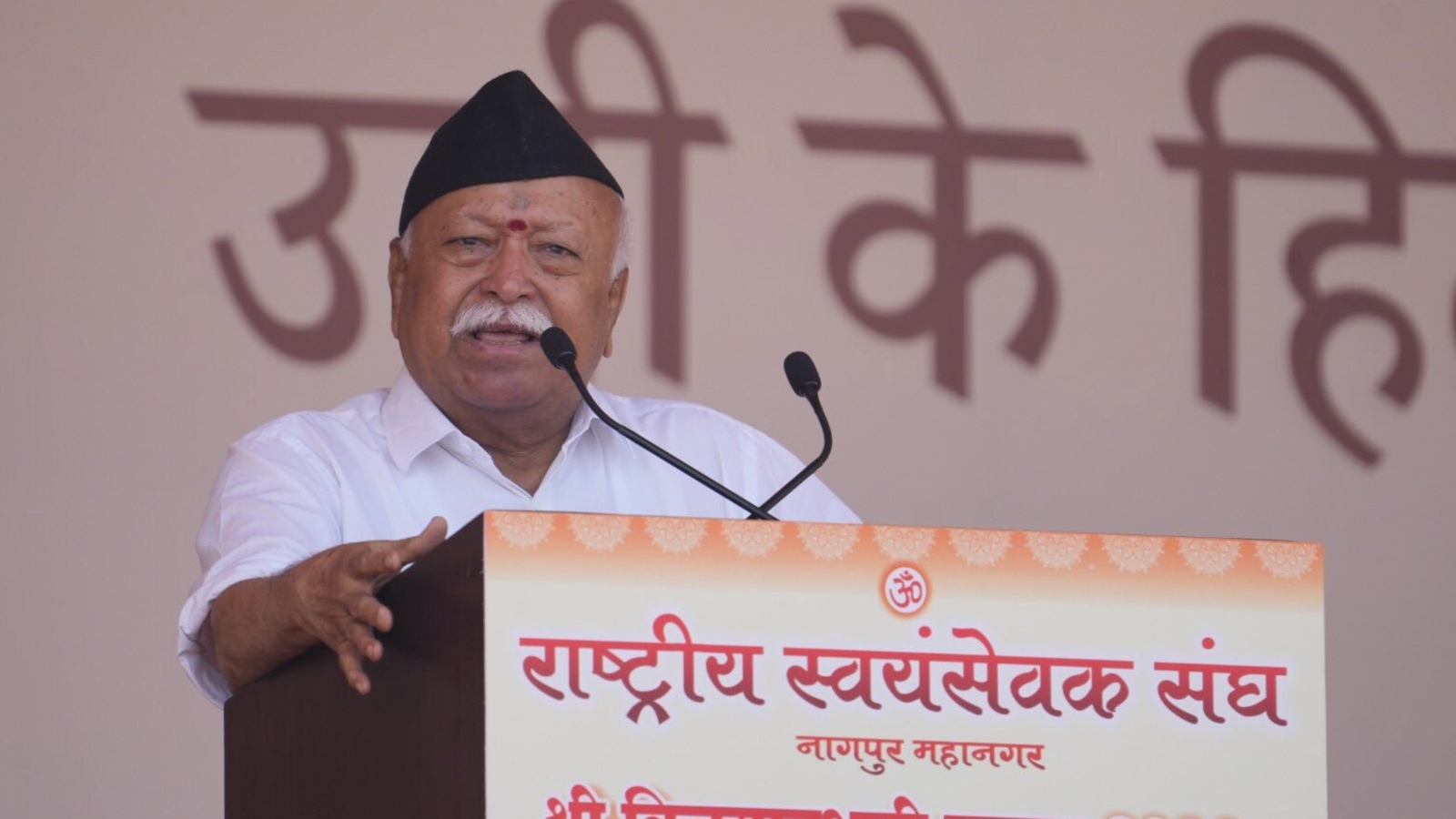
RSS Chief Mohan Bhagwat Warns Against Disruptions to India’s Progress
During the Vijayadashami Utsav held in Nagpur, Maharashtra, Mohan Bhagwat, the chief of the Rashtriya Swayamsevak Sangh (RSS), asserted that attempts to “dismantle” India would ultimately be futile. He emphasized the misconception that changing political leadership could catalyze significant transformations in the nation’s trajectory. “This has never happened before and will not happen again,” Bhagwat remarked.
In light of ongoing protests against Chief Election Commissioner Gyanesh Kumar concerning alleged discrepancies in the electoral rolls, Bhagwat pointed out that societal agitation often fails to yield real change, suggesting that genuine solutions must arise from within the community.
India’s Progress Amidst External Threats
Bhagwat highlighted that India is under observation from various external entities that may wish to derail its development. “It is evident… there are many powers in the world that want India to lose,” he noted, warning of a “storm coming in from the West” that seeks to undermine the nation’s cultural and structural integrity.
Comparative Global Agitations
He referenced recent political unrest in countries such as France, Bangladesh, and Nepal, suggesting that similar sentiments could be echoed within India. Citing historical protests, he remarked on the political upheaval in these nations, which have yielded significant governmental shifts due to sustained public agitation.
Concerns Over Political Unrest
Bhagwat also expressed concern that certain segments of the Indian population align with these external disruptive forces. He criticized elements within the country that he perceives to possess “low intelligence” and a “thirst for power,” urging citizens to remain vigilant and focus on problem-solving through constructive engagement rather than protests.
Political Context and Controversy
These statements come amid a political controversy sparked by comments from senior Supreme Court lawyer Prashant Bhushan, who characterized the protests in Delhi as indicative of a struggle for regime change. The ruling Bharatiya Janata Party responded with accusations against opposition parties for allegedly inciting unrest among the youth.
Balancing Development with Ecological Ethics
Addressing broader concerns around development, Bhagwat urged for a balanced approach that integrates ecological considerations with technological progress. He stressed the necessity of safeguarding India’s rich cultural diversity while ensuring that advancements are not pursued at the expense of humanity or the environment.
He illustrated the potential devastation of ecological mismanagement using examples from recent natural disasters, including those in Nepal, and emphasized the importance of learning from these instances to prevent future tragedies.
