


Groundbreaking Neutrino Research Underway in Lake Superior
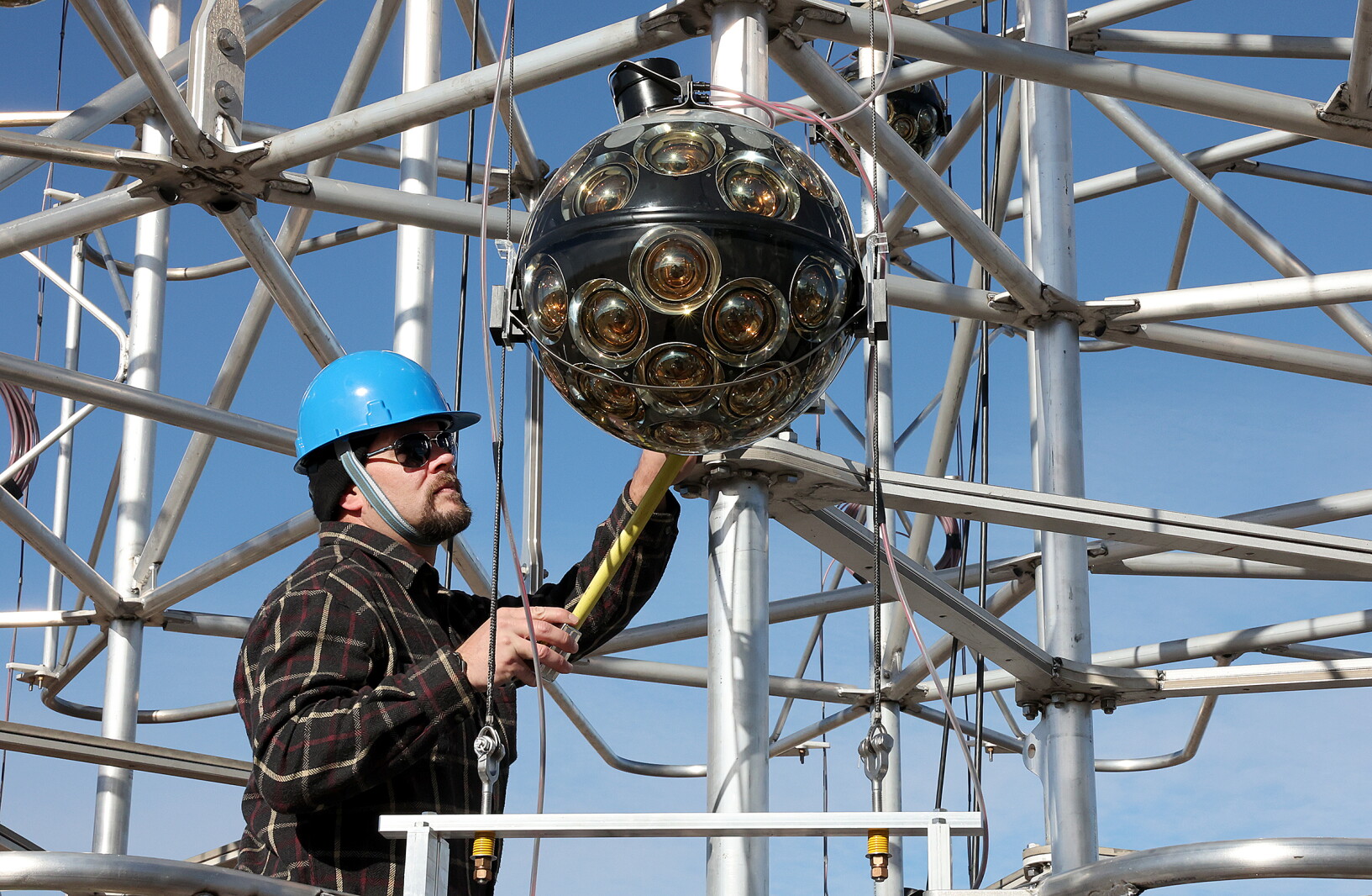
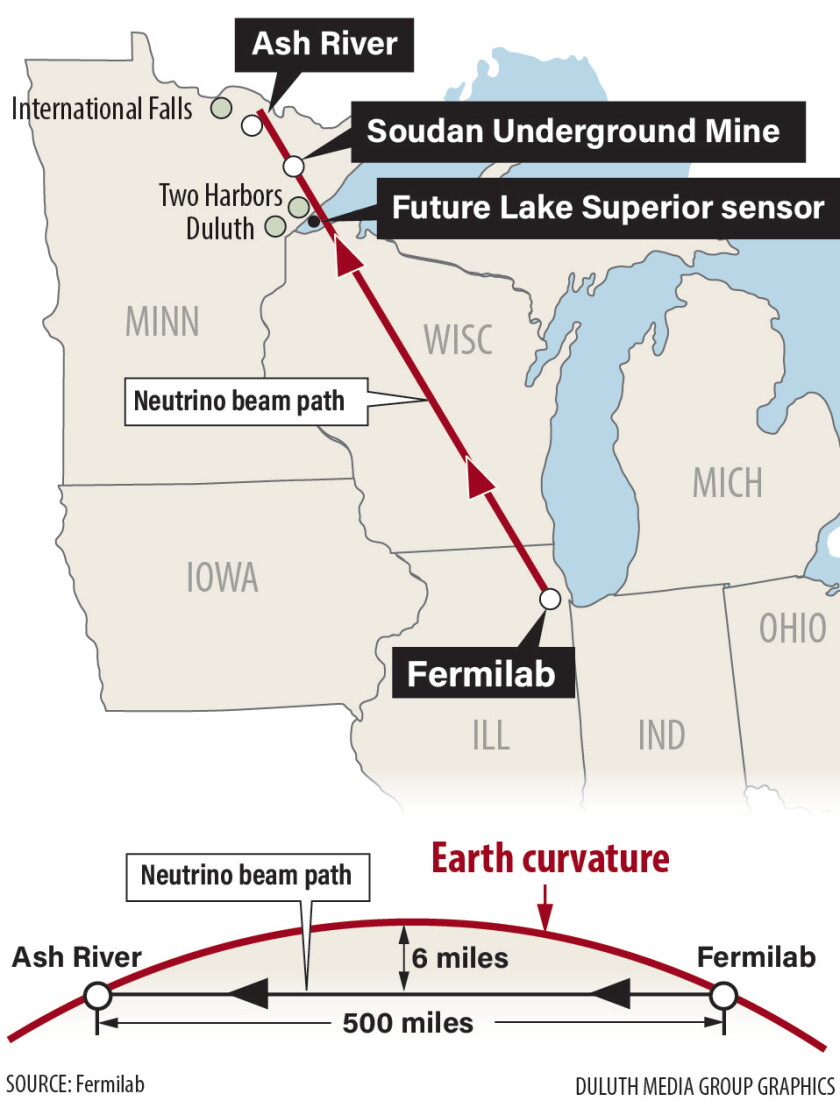
In a significant advancement for particle physics, researchers have initiated efforts to detect neutrinos from an accelerator located near Chicago, utilizing a newly established underwater sensor array in Lake Superior. Crews commenced the installation of five three-story metal towers equipped with photosensors, which are poised to be submerged nearly 700 feet beneath the lake’s surface, approximately three miles off the coast of Two Harbors, Minnesota.
The purpose of this innovative research is to capture elusive neutrino particles, which traverse through matter as if it were non-existent due to their exceedingly low mass and neutral charge. These particles are generated approximately every 1.2 seconds from a particle accelerator and offer invaluable insights into the fundamental workings of the universe.
Understanding Neutrinos
Neutrinos are extraordinarily abundant, with approximately one billion expected for every electron or proton. However, their minimal interaction with matter makes them notoriously difficult to study. When they collide with atoms in water, they produce a faint blue light, which is what the photosensors aim to detect. If successful, this experiment would mark the first time artificial neutrinos are identified in an aquatic environment.
Alec Habig, a physics professor at the University of Minnesota Duluth and principal investigator for the project, stated, “Neutrinos are one of the fundamental particles of the universe, but they’re the ones we know the least about because they’re neutral and go through everything — including whatever you build to study them.” The research is not only pivotal for scientific advancement but may have defense applications, such as monitoring nuclear activity.
Project Implementation and Future Opportunities
The experiment is sponsored by the U.S. Department of Defense’s Defense Advanced Research Projects Agency (DARPA). Although the potential for use in defense applications is noted, specifics are yet to be determined. John Bruzzese, a DARPA project manager, emphasized the importance of remaining open to various possibilities, stating, “It’s really about imagining the world of possibilities and then preparing for each one of them.”
Last Chance for Local Neutrino Research
Since 2005, particle beams from Fermilab have targeted areas in Minnesota, including past detector sites. However, changes in beam direction to new facilities in South Dakota are imminent, urging researchers to make the most of the remaining opportunity. Habig remarked, “This is our last chance. The beam is turned off in February, so we’re trying to see what we can do.”
Alongside the Lake Superior setup, a similar sensor will be placed in Lake Vermilion, employing large metal cylinders that are sensitive to radiation. Previous similar efforts faced technical challenges, but advancements have made the current project feasible.

Connecting the Sensors
The installation, facilitated by the Woods Hole Oceanographic Institute’s research vessel, involves deploying over three miles of fiber optic cable to link the sensors to Two Harbors, where data will be processed and analyzed. Following the sensor deployment, the Neil Armstrong will return to its ocean research missions, having completed its current objective.
Recognition in the Neutrino Research Community
The significance of neutrino research has been underscored recently, with the 2023 Nobel Prize in Physics awarded to Francis Halzen for his contributions to the IceCube Neutrino Observatory. This recognition highlights the relevance and excitement surrounding neutrino studies. Local engineer Terry Benson expressed the moment’s importance as a return to his roots and an accomplishment for the research community.
Conclusion
This undertaking reflects a significant step in the understanding of one of the universe’s most ubiquitous yet least understood particles. With the deployment of advanced underwater technology and collaborative efforts from various institutions, the project promises to unveil new frontiers in particle physics and could eventually contribute to broader applications in various fields.
