


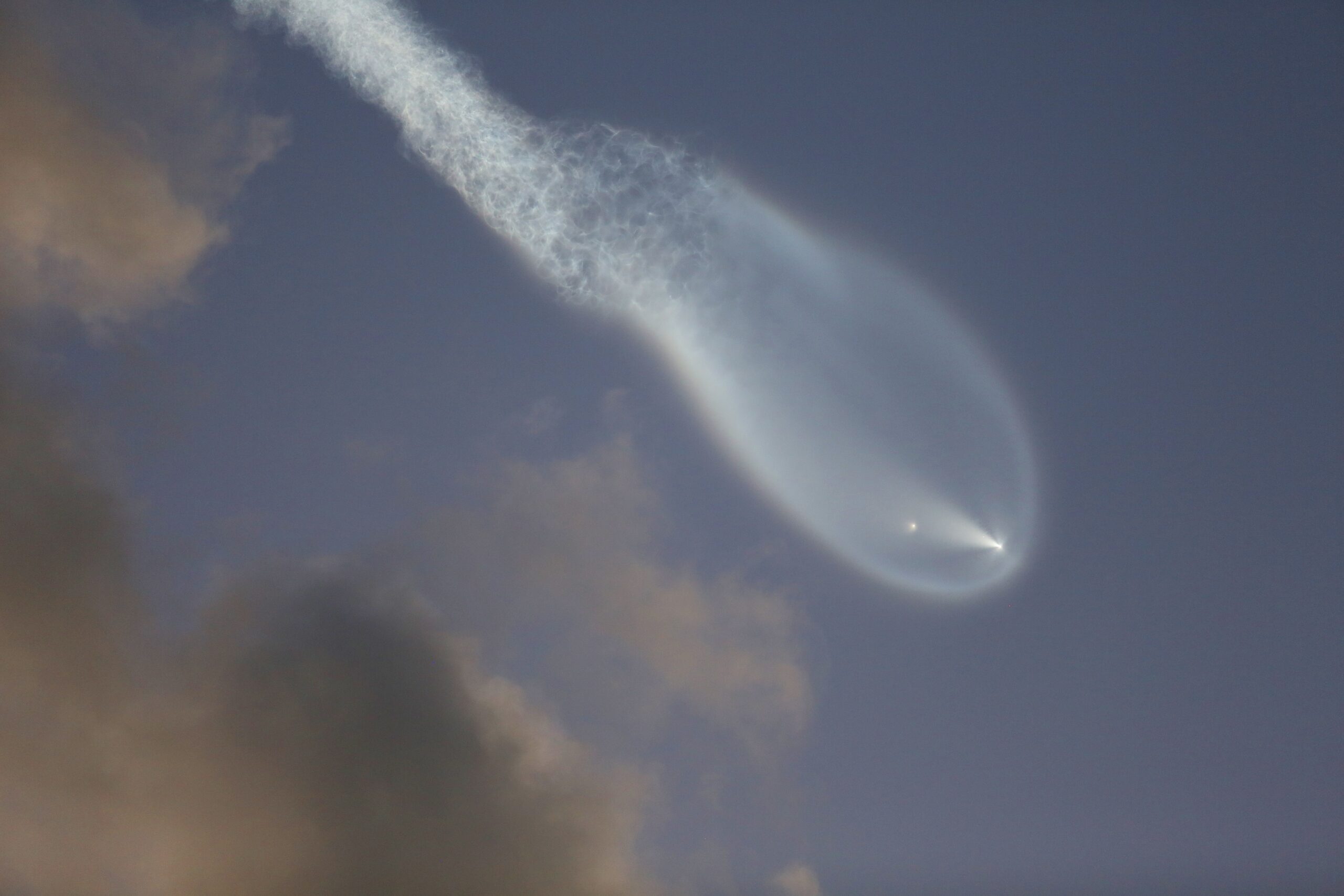
Spotlight on SpaceX Launches: A Glimpse of the Sky Jellyfish Effect
In a remarkable display of space innovation, SpaceX successfully launched its Falcon 9 rocket on two occasions this October 2026. Each event not only served its scientific purpose but also offered spectators a visual spectacle reminiscent of mystical jellyfish floating in the sky.
First Launch: CRS-35 Mission
On the early morning of October 13, a Falcon 9 rocket lifted off from Space Launch Complex 40 at Cape Canaveral Space Force Station at 6:33 a.m. EDT. This mission, known as CRS-35, was part of SpaceX’s commercial resupply services for NASA aimed at the International Space Station (ISS).
The rocket carried approximately 6,300 pounds of vital scientific supplies and experiments. As it ascended through the night sky, the sunlight illuminated the rocket’s exhaust plumes, creating a striking, jellyfish-like formation in the atmosphere. Photographers captured this ethereal effect, which has become a hallmark of SpaceX launches during twilight hours.
Second Launch: Bandwagon-5 Rideshare Mission
Following closely, on October 20, the Bandwagon-5 rideshare mission took off just before sunrise at 7:04 a.m. This mission involved multiple payloads, including SpaceX’s Starfall system, designed for short-term microgravity research.
Although this launch did not produce the same vivid aesthetic as the CRS-35, the rocket’s trajectory allowed for a brief display of the jellyfish effect as the exhaust plumed under the sun’s rays.
Significance of the Launches
Both launches signify SpaceX’s continual partnership with NASA, marking a crucial aspect of the United States’ ongoing commitment to space exploration and scientific advancement. The Falcon 9’s first stage completed its 19th launch and landing successfully on the droneship, a testament to SpaceX’s reliability in reusability.
Looking Ahead
The launch of a Falcon 9 is becoming a familiar sight along the Florida coastline. With 60 launches executed from the Space Coast in 2026 alone, SpaceX continues to lead in space transport, although they are moderating their launch pace to focus on expanding their Starship capabilities at Kennedy Space Center.
As competition among aerospace providers remains high, organizations like United Launch Alliance (ULA) and Blue Origin are working to regain their footing, with new launches anticipated as they address ongoing challenges.
Conclusion
The continued efforts by SpaceX not only exemplify advancements in space technology but also bring the wonder of space exploration to the public’s eye through spectacular visual phenomena. As these missions progress, the community eagerly awaits what future launches will unveil.
