


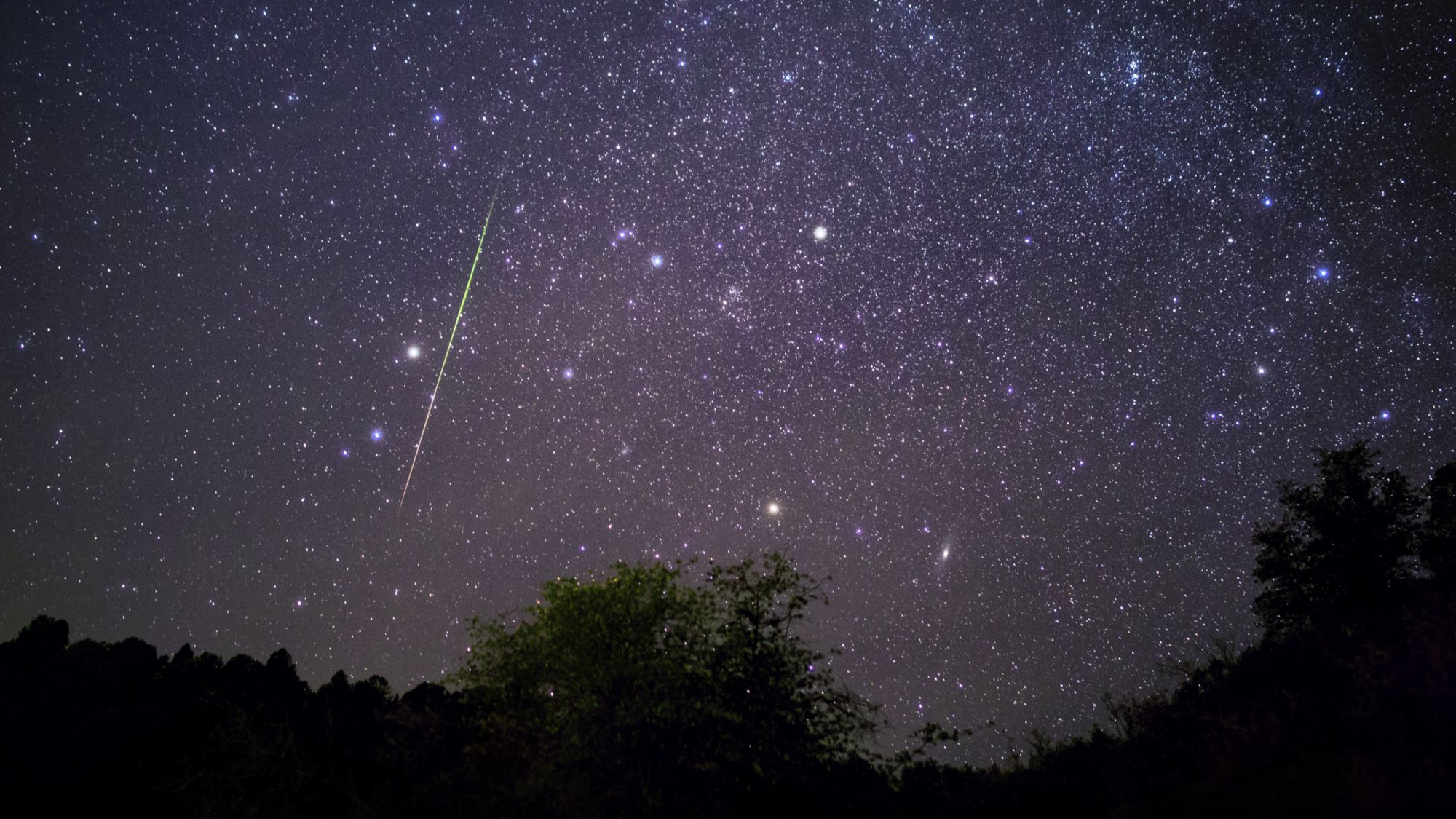
The Leonid Meteor Shower: A Celestial Spectacle
The Leonid meteor shower is set to illuminate the night sky on November 17-18, offering stargazers the chance to witness shooting stars and fireballs as Earth travels through debris left by Comet 55P/Tempel-Tuttle.
Viewing the Leonids: Optimal Timing
Under perfect viewing conditions, observers can expect to see up to 15 meteors per hour during the peak of the shower. However, NASA estimates a more conservative figure of under three meteors per hour. The prime opportunity for sighting these meteors occurs in the early morning hours of November 18, as the radiant point in the constellation Leo ascends to its zenith in the southeastern sky. By this time, the waxing moon will have set, resulting in darker skies that increase the visibility of fainter meteors.
Finding the Best Spot for Meteor Watching
For the best viewing experience, locate a clear patch of sky away from the constellation Leo, as meteors observed from this vantage point tend to leave longer and more pronounced trails. Allow your eyes 20 to 30 minutes to adjust to the darkness before searching for these celestial wonders.
What Makes the Leonid Shower Unique?
The Leonids are distinguished not only by their bright meteors but also by their potential to produce exceptionally brilliant fireballs and long-lasting meteors, which can create stunning visual displays as they skim through Earth’s atmosphere at shallow angles. This meteor shower’s historical significance is underscored by its ability to generate meteor storms—intense bursts of activity that can occur when Earth passes through particularly dense debris fields from the comet.
Upcoming Leonid Meteor Storms
Another meteor storm is anticipated with the next dense trails expected in the years ahead; predictions suggest that a significant display could occur as soon as 2031, with further spectacular displays projected for 2033 and 2034. Observers eager for more notable events will need to be patient, as opportunities for witnessing these stunning meteor storms are infrequent.
Capturing the Moment
For astrophotographers looking to document the meteor shower, it is advisable to consult guides tailored to capturing shooting stars, alongside recommendations for the best camera equipment and lenses suited for astrophotography.
Community Engagement
We invite readers who capture photos of the Leonids to share their images and observations. Contributions can be sent to spacephotos@space.com for a chance to be featured.
