


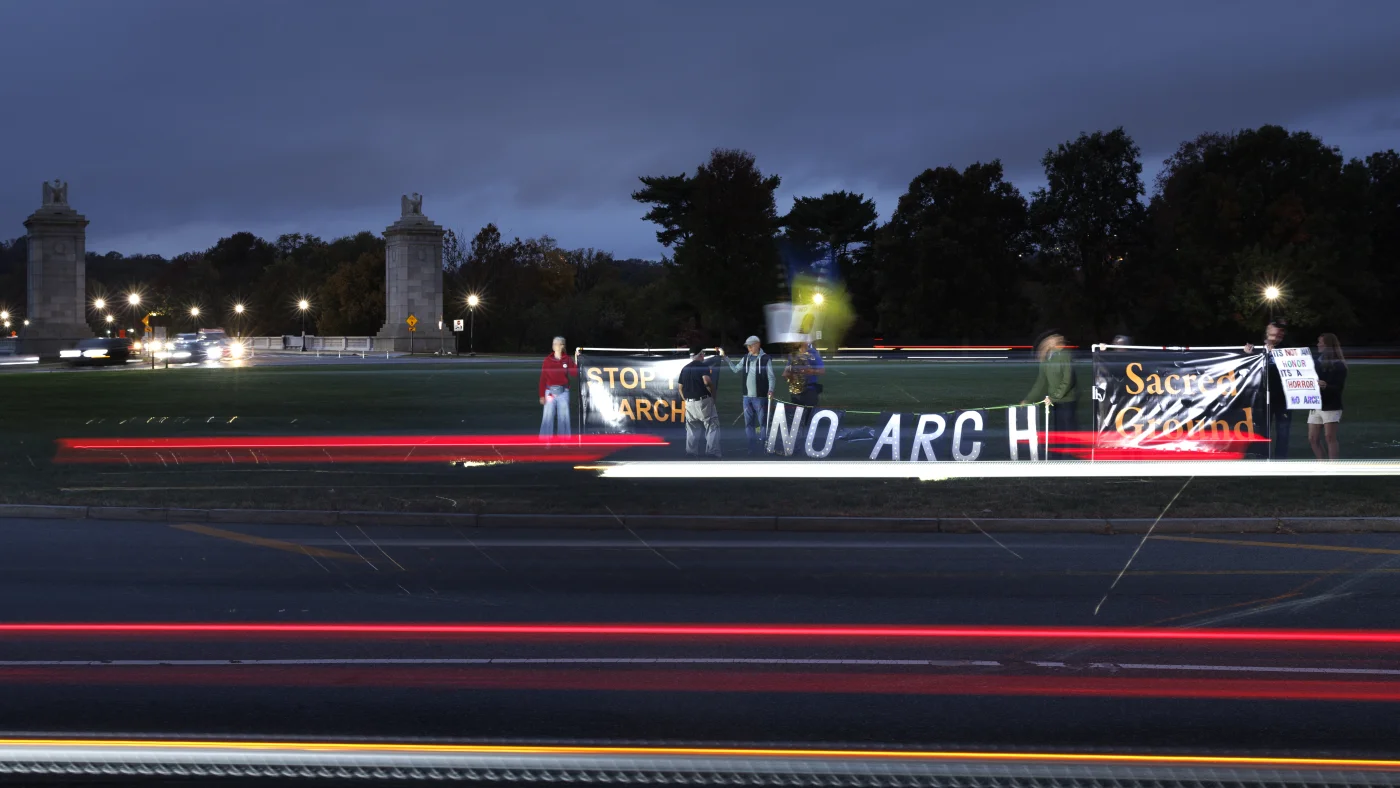
Federal Judge Halts Proposed Arch Construction Over Legal and Public Concerns
On Friday night, a federal judge issued a temporary halt to the construction of a proposed arch in Washington, D.C., which has stirred significant controversy among local residents and lawmakers. District Court Judge Tanya Chutkan’s order prohibits any construction work for a period of 14 days, following a request from the governments of D.C. and Virginia.
Legal Background and Rationale for the Halt
Judge Chutkan detailed her reasoning in a comprehensive 33-page opinion, critiquing the administration’s shifting justifications—especially its new focus on national security. She acknowledged that the local governments demonstrated a strong likelihood of suffering harm if the construction proceeded, particularly due to potential traffic disruptions.
The 250-foot arch’s proposed location at Memorial Circle, serving as a connection between the Lincoln Memorial and Arlington National Cemetery, has become a focal point of contention.
Public Opposition and Testimony
Earlier in the week, the National Capital Planning Commission, a federal panel comprised of presidential appointees, voted 8-4 to approve the arch after a lengthy session that included nearly eight hours of public testimony. Throughout this meeting, demonstrators gathered outside, expressing their dissent. Concerns raised included potential obstruction of significant views, risks to Arlington National Cemetery, and complications for D.C.’s airspace.
Many speakers during the meeting, including veterans and local citizens, voiced their opposition passionately. A spokesperson for the veterans’ community characterized the project as an act of vanity on the part of the Trump administration.
Legal Challenges Ahead
Legal objections have been filed against the project’s advancement. A lawsuit from Vietnam War veterans and architectural historians argues the arch’s construction is unlawful due to a lack of congressional approval, which has not been sought by the administration. The D.C. and Virginia governments also initiated a concurrent lawsuit.
Chutkan’s ruling arrived shortly after the commission’s decision, and the court has instructed the government to inform it promptly of any actions taken regarding the arch’s construction.
Future Implications and Legislative Responses
Historian and preservation groups are decrying the approval process as a violation of federal regulations and an affront to veterans. In light of these sentiments, there is a palpable drive among Democratic lawmakers to scrutinize the project further and take preventive measures should they regain control in Congress.
Virginia Representative Don Beyer has introduced legislation aimed at prohibiting funding for the arch, expressing hope that support will grow significantly in the upcoming Congressional session.
Conclusion
The controversy surrounding the proposed arch represents broader themes of governance, public sentiment, and historical preservation in U.S. politics. As legal battles loom and public opinion wavers, the final fate of the arch remains uncertain, with voices both for and against keen to shape its future.
