


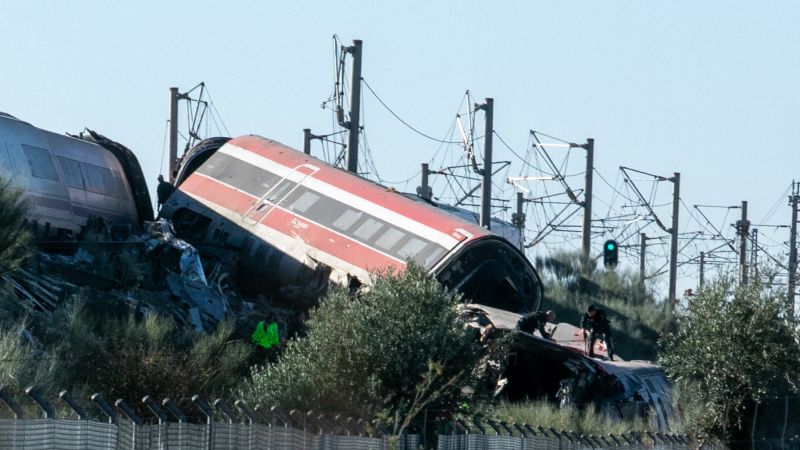
Recent Train Crash in Spain: A Grievous Parallel
Overview of the Incident
A tragic train crash occurred in the Toledo province of Spain, echoing a similar event earlier this year in Córdoba province that claimed over 40 lives. This latest accident took place on the same high-speed rail corridor connecting Madrid and Seville, spanning approximately 300 miles.
Details of the Crash
Wednesday’s collision, which transpired about 130 miles from the January disaster site near Adamuz, has led to the suspension of the high-speed line service between the Madrid region and Andalusia.
Reports indicate that the Toledo incident involved two high-speed trains, with one, operated by the company Iryo, reportedly stationary or traveling at a low speed when it was struck from behind by a high-speed AVE train operated by Renfe, Spain’s national railway.
Collision Dynamics
Preliminary information points to the crash being a rear-end collision. The earlier Córdoba accident was marked by a derailment, where one train crossed onto an adjacent track.
Investigations Underway
As of now, the Spanish emergency services have not confirmed the precise cause of Wednesday’s crash. Efforts are ongoing to gather further details surrounding this incident as authorities continue their investigation.
Concerns Over Rail Infrastructure
The train drivers’ union in Spain, known as Semaf, has previously expressed concerns regarding the impact of high-speed travel on railway infrastructure. Vibrations from high-speed trains can lead to accelerated wear and tear, prompting union representatives to call for a reduction in the maximum train speeds on various lines.
In August 2025, the union reached out to Adif, the national railway operator, advocating for a speed reduction from 300 km/h to 250 km/h on certain high-speed routes to minimize infrastructure stress.
Conclusion
The recent crash is a stark reminder of the pressing safety concerns surrounding high-speed rail travel in Spain. As investigations proceed, further insights into the causes and potential preventive measures will be crucial in ensuring the safety of passengers and train operations in the future.