


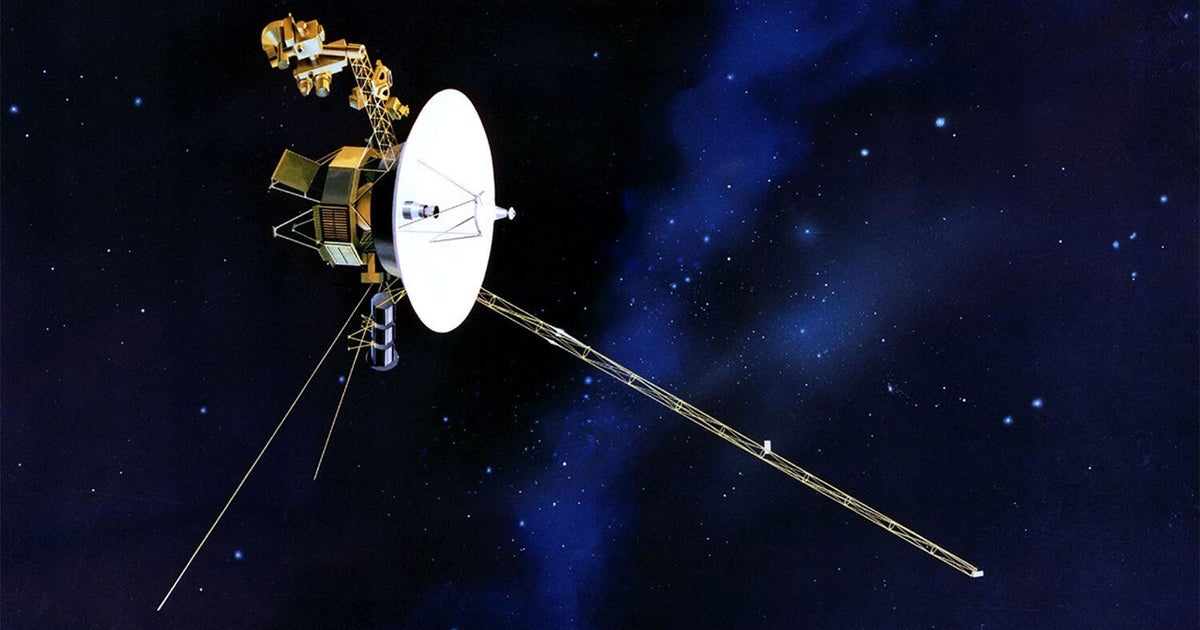
NASA’s Voyager 1 Reaches New Milestone in Interstellar Voyage
Nasa’s Voyager 1 spacecraft has made headlines again by reaching a monumental distance—one light day away from Earth, equivalent to over 16 billion miles. Since its launch in 1977, Voyager 1 has ventured further than any human-made object and continues to transmit crucial data about the environment of interstellar space.
Voyager Family: A Legacy of Exploration
Alongside its twin, Voyager 2, which embarked on its journey a few weeks earlier, Voyager 1 conducted a thorough exploration of the outer planets, including Jupiter and Saturn. Voyager 2 later added Uranus and Neptune to its impressive portfolio before following Voyager 1 beyond the solar system in 2018. Although both spacecraft are now in interstellar space, they remain active, sending regular updates back to Earth regarding magnetic fields and plasma waves.
Notable Achievements of Voyager 1
At 5:16 a.m. EST on Wednesday, Voyager 1’s velocity of nearly 38,000 miles per hour brought it to the one-light-day milestone. Radio signals from the spacecraft, traveling at the speed of light (approximately 186,000 miles per second), now take a full 24 hours to reach NASA’s Jet Propulsion Laboratory (JPL). The team of 13 members at JPL anticipates confirmation of the milestone once they receive Voyager’s first signal after crossing this significant threshold.
The Voyager Mission’s Impact
The Voyager program is often compared to the Apollo moon landings, marking it as one of the greatest feats of space exploration. “It’s challenging to articulate the significance of this mission,” said Kareem Badaruddin, Voyager Interstellar Mission Manager. He emphasized that this endeavor serves to unite people around a common achievement that transcends individual contributions.
Limited Power and Future Prospects
The power supplied to both spacecraft comes from radioisotope thermoelectric generators, utilizing the decay of plutonium-238. Unfortunately, the power output is gradually decreasing, with Voyager 1 currently operating on about 210 watts, enough to maintain two of its ten instruments. Voyager 2, slightly more powerful, is functioning on about 230 watts. Engineers hope to manage this power effectively to prolong communication with the craft for several more years.
Messages to the Cosmos
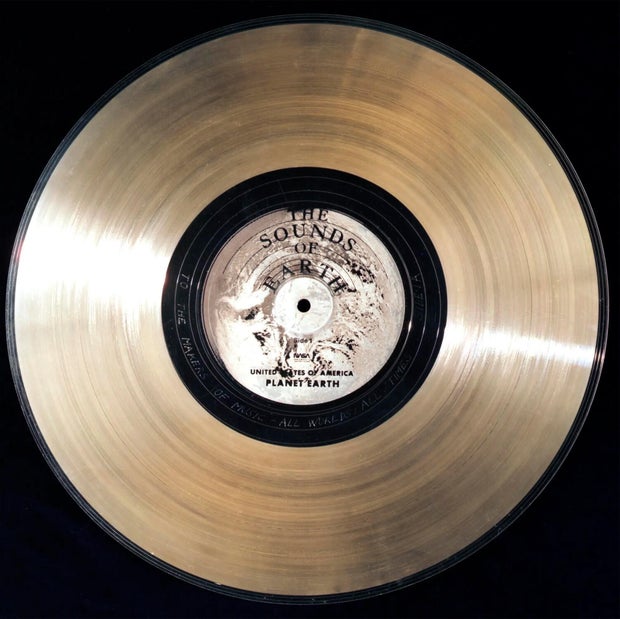
As they journey beyond the solar system, both Voyager spacecraft carry golden phonograph records that encapsulate messages from Earth. These records include greetings in 55 languages, a collection of photographs showcasing Earth’s diverse cultures and wildlife, and a selection of music from various genres. Carl Sagan, who spearheaded this project, described these records as a “gift across the cosmic ocean” intended for any intelligent life forms that might encounter Voyager in the distant future.
Voyager 1’s Journey: A Timeline into the Future
Voyager 1 will take thousands of years to reach key milestones in its trajectory. Within 18,000 years, it will pass a distance of one light-year from Earth, and in one million years, it will be approximately 56 light-years away. As it journeys for billions of years, Voyager 1 will remain an enduring testament to humanity’s quest for knowledge in the cosmos.
Conclusion
Despite the gradual depletion of its power source, both Voyager spacecraft are expected to drift through interstellar space for over a billion years. Their continuing legacy invites us to reflect on our place in the universe and the fragility of life on Earth, all while serving as silent ambassadors of humanity’s achievements.
