


Mars Through the Lens of Curiosity: A Unique Perspective on the Red Planet
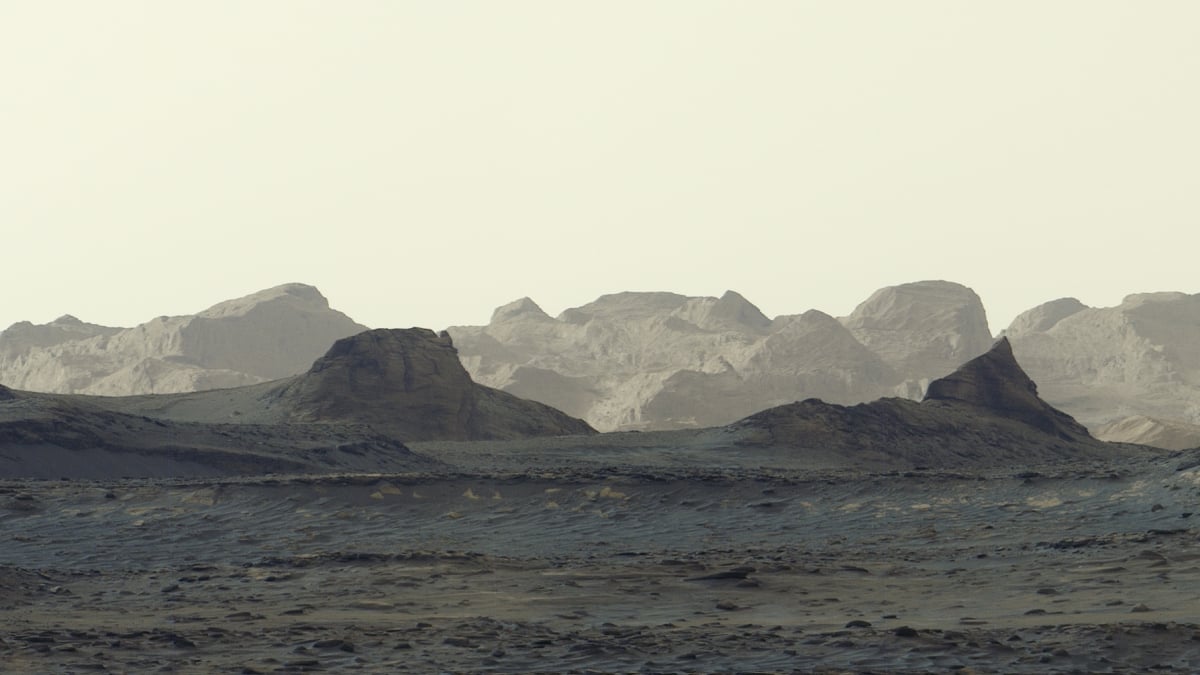
On August 11, NASA’s Curiosity rover captured a stunning panorama of its surroundings from Gale Crater, showcasing a landscape that defies the typical perception of Mars. Traditionally known as the “Red Planet,” this view reveals a palette of blues and grays rather than the expected rust tones.
The Artistic Choice of Color Representation
In a departure from its usual practices, NASA opted not to modify the colors in this particular image, presenting it as captured by the rover’s Mastcam. This decision was described as “an artistic choice” by the agency, raising interesting questions about how Mars looks to the human eye.
Factors such as diminished sunlight, atmospheric dust, and the rover’s imaging technology all contribute to the intricate challenge of portraying the real appearance of the Martian terrain. As noted by scientists, every individual might perceive the colors differently, depending on their own experiences and physiological responses.
Understanding Mars’s Terrain Through Color Correction
The aim behind adjusting Martian photographs is often to approximate how the rocks would appear under Earth’s sunlight. Martian dust tends to dominate the visible landscape, affecting the perceived color of the rocks and terrain. By calibrating images to account for this dust, scientists can analyze the intrinsic properties of the Martian surface more effectively. As Mike Malin, principal investigator for Curiosity’s Mastcam, explained, “The surface of Mars is covered with pink-red dust that disguises the surface geology.”
The process of color correction, known as white balancing, serves as a vital tool for geologists comparing Martian features to similar geological formations on Earth. Mark Lemmon, a co-investigator on the Perseverance rover, explains how achieving a stable reference point through such adjustments is crucial, especially when contrasting the landscapes of Mars with terrestrial environments.
Real vs. Edited: The Nature of Martian Colors
Is the image we receive a true representation of Mars? The answer is nuanced. A visitor standing next to Curiosity would likely see a somber and muted landscape, with shadows obscuring colors and details. The less intense sunlight on Mars, located significantly farther from the Sun than Earth, plays a pivotal role in such perceptions.
Additionally, human vision itself adapts to different environments. As Lemmon mentioned, “If you spend time in a very colored environment, the brain starts to white balance the scene,” which adds another layer of complexity to what could be classified as “real” Martian color.
Insights into Martian Geology
Curiosity’s stunning panorama also provides vital insights into its geological features, particularly the yardangs—formidable ridges sculpted by wind over time. Scientists anticipate that Curiosity will reach the base of these formations by 2027, which could unravel more secrets about Mars’s ancient environmental conditions.
These yardangs, notable for their distinct color and texture, could offer clues about the region’s volcanic history and possibly surrounding climates. As Ashwin Vasavada, Curiosity’s project scientist, pointed out, the color differentiation among geological features is essential and can be observed consistently even in orbital imagery.
Conclusion: Redefining Our Understanding of Mars
The recent images released by NASA challenge preconceived notions of Mars’s color and texture. As scientists delve deeper into the data Curiosity continues to send back, they emphasize that while these images may vary in their representations due to environmental factors, they also pave the way for a better understanding of Martian history.
In the end, as Lemmon noted, many people imagine Mars as being much redder than it is, with reality often revealing a more butterscotch hue. As exploration continues, so will our understanding of how color and composition define this intriguing planet.
