


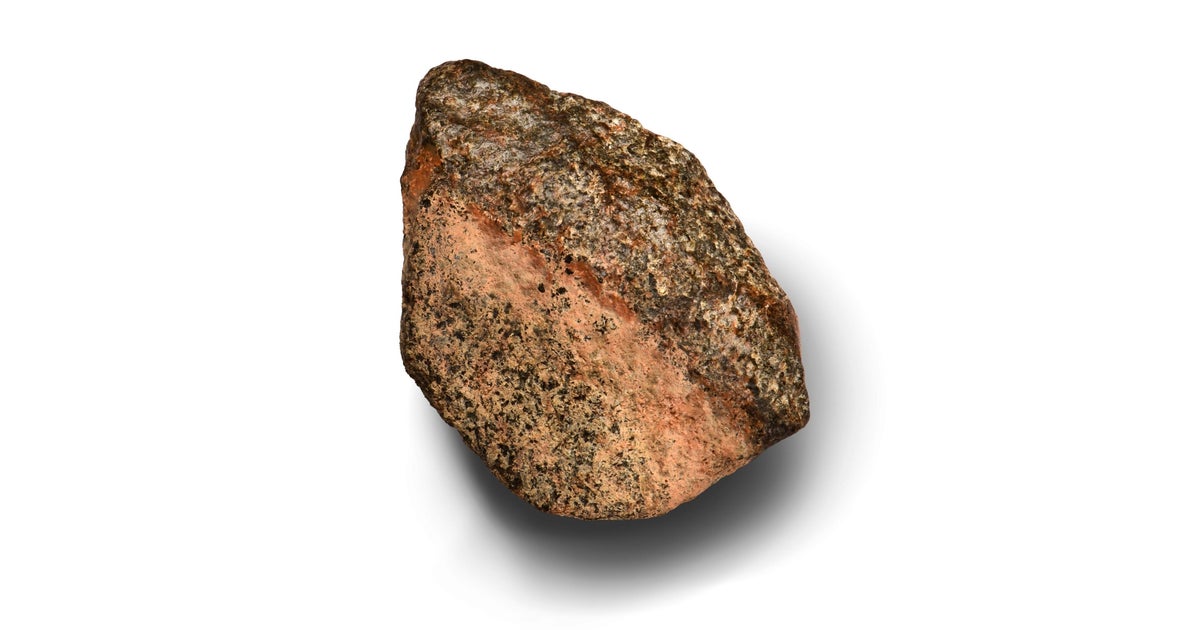
The Discovery of Teghaza 001: An Ancient Martian Meteorite
A remarkable find in the Sahara Desert is shedding new light on the geological history of Mars. In 2022, scientists identified a meteorite, named Teghaza 001, as a fragment originating from the Red Planet, dating back approximately 4.1 billion years.
Finding Teghaza 001
Weighing nearly two pounds, this meteorite was unearthed in Mali’s salt plains. The identification process, spearheaded by researchers at NASA, confirmed that Teghaza 001 is one of about 435 known Martian meteorites on Earth.
Significance of the Age and Composition
The age-dating conducted on Teghaza 001 reveals that it ranks as one of the three oldest Martian meteorites identified to date. According to NASA, this discovery provides a “rare snapshot” of Mars’ crust and its formation history.
“It was only after we started looking closely that we realized this meteorite is really unique,” noted Yang Liu, the lead author of the research paper detailing these findings. He is part of NASA’s Jet Propulsion Laboratory. “One of the paper’s reviewers called it a Rosetta Stone for Mars.”
Insights into Mars’ Geological History
Teghaza 001 has offered unprecedented insights into Mars’ crust, showcasing how it formed from cooling magma and was subsequently altered by water on the planet’s surface. This meteorite contains a distinctive array of volcanic minerals, including zircon crystals, which align with samples documented by NASA’s Mars Reconnaissance Orbiter.
Innovative Research Techniques
Using an advanced age-dating technique that allows for analysis of individual mineral grains, researchers were able to conclude that the rock’s alteration by Martian water occurred approximately 4.1 billion years ago. This suggests early Mars may have featured a more dynamic water cycle than previously understood. Francis Tissot, a geochemistry professor at Caltech, played a pivotal role in guiding the research team through this novel approach.
Future Research Directions
Lee Saper, a co-author of the study, emphasized the historical importance of the find, stating that Teghaza 001 “records interactions of water and rock and maybe even an imprint of the Martian atmosphere as it was losing water.” A separate study published earlier in the year focused on the meteorite’s water content, providing insights into how water may have influenced Mars’ early topography.
Lee further remarked, “This is really our first piece of Martian crust from a part of Mars we’ve never had a sample of before.” Liu acknowledges that the research on this meteorite is only beginning, saying, “We’ve only scratched the surface.”
Conclusion
The Teghaza 001 meteorite not only enriches our understanding of Mars’ ancient crust but also hints at the complex interplay between water and rock on the planet. As ongoing studies unfold, they promise to deepen our comprehension of Martian history and its potential for past life.
